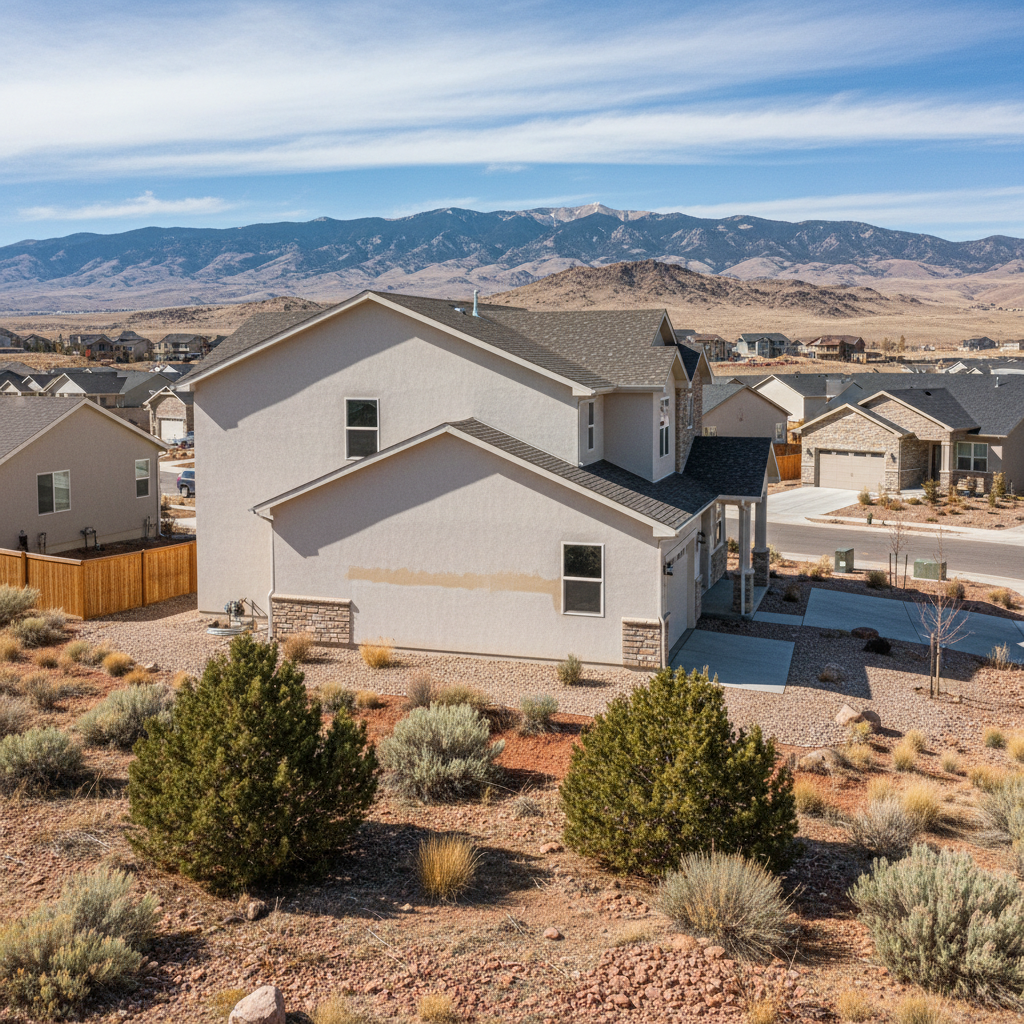
Alright, let's talk about stucco cracks. If you live here in Eagle Mountain, especially in some of the older parts of SilverLake or even newer builds around The Ranches, you've probably seen 'em. Maybe it's just a hairline crack, or perhaps it's a bigger spiderweb pattern. Whatever it is, it's not just an eyesore; it's a sign your stucco needs some attention.
Why Eagle Mountain Stucco Cracks Happen
You might be wondering why your stucco is cracking in the first place. It's not usually just one thing, but a combination of factors. Here in Eagle Mountain, we've got some unique challenges that play a big role.
Our Clay Soil: This is a big one, no doubt about it. We've got expansive clay soil all over the place. When it gets wet, it swells; when it dries out, it shrinks. This constant movement can put a ton of stress on your home's foundation and, by extension, your stucco. It's like your house is doing a slow, subtle dance, and the stucco is definitely feeling the strain.
Temperature Swings: Our weather here can be pretty dramatic, right? Freezing cold winters, scorching hot summers. Materials expand and contract with temperature changes. Stucco is tough, sure, but after years of these cycles, it can start to show fatigue in the form of cracks.
Poor Installation: Look, nobody wants to hear this, but sometimes it just wasn't put on right in the first place. If the mix wasn't correct, or if the lath wasn't installed properly, or if it was applied in conditions that were too hot or too cold, you're going to see problems down the road. We see a lot of homes where corners were cut, and now folks are paying the price for it.
House Settling: Every house settles a bit over time. It's natural. But if the settling is uneven or excessive, it can create structural stress that shows up as cracks in your stucco. This is especially true for homes built on slopes or areas with significant fill dirt.
Not All Cracks Are Created Equal
Now, when you see a crack, don't panic immediately. Some cracks are minor and mostly cosmetic, while others are a red flag for bigger issues. Here's a quick rundown of what we usually see:
Hairline Cracks: These are super thin, often look like a strand of hair. They're usually just surface-level and happen from normal expansion and contraction. Easy to patch up.
Spiderweb Cracks (Map Cracking): This pattern often indicates a mix issue or that the stucco dried too quickly. Again, usually surface level, but can let water in if not addressed.
Step Cracks: These follow the mortar lines in masonry foundations or block walls underneath the stucco. They often point to foundation movement, which is something you'll definitely want to get checked out.
Diagonal Cracks: Cracks that run diagonally, especially from the corners of windows or doors, can also be a sign of structural stress or uneven settling. These need a closer look.
The Right Way to Patch Stucco in Eagle Mountain
Patching stucco isn't just about slapping some new material on there. If you want it to last and blend in, you've got to do it right. Here's what we focus on at Horizon Stucco Company:
1. Diagnosis is Key
Before we even think about patching, we figure out why the crack happened. If it's foundation movement, patching alone isn't going to solve your problem long-term. You'll just get another crack in the exact same spot. We'll tell you if we think there's a deeper issue that needs to be addressed first.
2. Proper Preparation
You can't patch over dirt or loose material. We clean out the crack, sometimes widening it slightly to get a good bond. We'll also make sure the area is prepped correctly, often by misting it with water, especially on hot days, so the new stucco doesn't dry out too fast.
3. Matching the Mix and Texture
This is where local expertise really shines. Stucco isn't just one thing; there are different types of mixes and finishes. We know what's commonly used in Eagle Mountain, from the older smooth finishes to the more common sand or dash finishes you see in places like the White Hills neighborhood. We work hard to match the existing texture and color so the patch disappears as much as possible. It takes a good eye and experience to get this right.
4. Layering and Curing
Stucco is applied in layers. We don't just glob it on. We build it up, allowing each layer to cure properly. This ensures a strong, durable patch that will stand up to our Eagle Mountain weather.
5. Sealing and Finishing
Once the patch is done, we make sure it's properly sealed to prevent water intrusion. This is crucial for preventing future damage.
Ignoring those cracks isn't going to make them go away. In fact, it's just inviting water to get behind your stucco, which can lead to much bigger, more expensive problems down the line – think rot, mold, and structural damage. If you've got cracks, especially those diagonal or step cracks, give us a call. We're happy to come take a look and give you an honest assessment of what's going on and how we can fix it right.